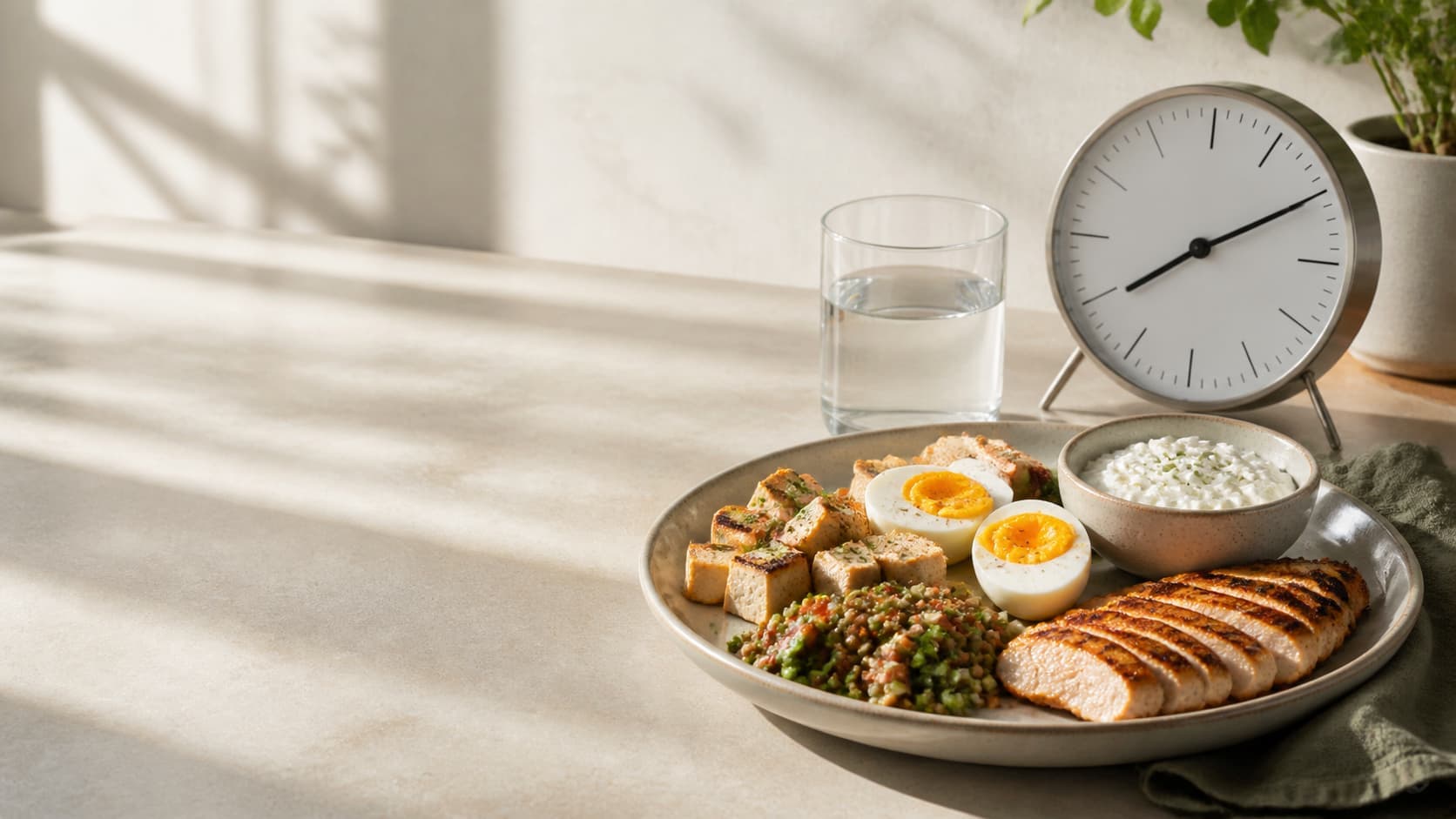
Protein fasting has become a popular name for a simple idea: eat within a shorter daily window and make protein a clear part of the meals around it. Some versions also include a protein shake during the time they call the “fast”.
That last detail matters. A protein shake contains energy, so it ends a strict fast. In practice, many people are not doing a fast in the traditional sense. They are using a structured eating window and a convenient protein-rich drink or meal. That can still be useful, but it is worth understanding what the method can and cannot do before you try it.
What is protein fasting?
Protein fasting is not a single, medically defined diet. Online versions vary, but they usually combine two ideas:
- time-restricted eating: most food is eaten within a set number of hours;
- a protein focus: meals or drinks contain a deliberate protein source.
For example, someone might have their first proper meal at noon, finish eating around 8 p.m., and use a protein-rich breakfast or snack instead of a traditional meal. Another person might simply skip breakfast and make lunch and dinner more protein-focused. There is no official protein-fasting schedule that everyone needs to follow.
The method is therefore better understood as a meal-timing option. The “protein” part can help you plan satisfying meals. The “fasting” part can reduce the number of eating occasions. Neither part is a shortcut that overrides your overall calorie intake, food quality, sleep, or activity.
Can protein fasting help with weight loss?
It can help some people, mainly because a shorter eating window may make it easier to eat less without tracking every calorie. A protein-rich meal can also make a routine feel more satisfying and easier to repeat.
But time-restricted eating is not automatically better than a regular calorie-controlled eating pattern. In a randomized trial of adults with obesity, time-restricted eating combined with calorie restriction did not produce significantly more weight loss than daily calorie restriction alone after 12 months. The study is available through PubMed.
That is useful context. If protein fasting works for you, it is probably because the structure fits your appetite and schedule, not because the clock has a special fat-burning effect. If you become very hungry, eat too little during the day, or compensate with large evening meals, the method may be a poor fit.
Why protein still matters
Protein is one of the three main macronutrients. It contributes to the maintenance of muscle and other tissues, and protein-rich foods can make meals more substantial.
For healthy adults, the European Food Safety Authority lists a population reference intake of 0.83 grams of protein per kilogram of body weight per day. That is a general reference, not a personal prescription. Your needs can differ with training, age, pregnancy, breastfeeding, or a medical condition. EFSA’s protein reference values explain the evidence behind the general adult figure.
You do not need to put all of your protein into one shake or one meal. Spreading it across the meals you actually eat is often easier. If you want a more detailed starting point, read our guide to how much protein you need each day.
How to try protein fasting without making it extreme
Start with a routine that leaves room for normal life. A 10- to 12-hour eating window is often easier to test than jumping straight into a very short window. You can also begin by moving your first or last meal by an hour rather than changing your entire day.
Use these principles:
- Choose a realistic window. It should work with your work, training, sleep, social life, and hunger. A schedule you can repeat is more useful than an impressive schedule you abandon.
- Keep actual meals. Build meals around protein foods such as yoghurt, eggs, fish, poultry, tofu, tempeh, beans, lentils, or lean meat. A shake can be convenient, but it does not need to replace every meal.
- Add fibre and plants. Include vegetables, fruit, whole grains, potatoes, beans, or lentils. Protein alone is not a balanced diet.
- Do not turn the eating window into a competition. Eat enough to support your energy, training, and recovery. A shorter window is not automatically healthier.
- Drink normally. Water, unsweetened tea, and black coffee are commonly used during a calorie-free fasting period. Milk, sugar, juice, and protein drinks contain calories and technically end the fast.
- Review how you feel. Notice hunger, concentration, training performance, sleep, and whether the plan makes you think about food constantly.
A simple example day
The exact times are not important. This is one way to create structure while keeping meals varied:
- Morning: water, tea, or coffee if you enjoy them; no need to force a protein drink if you want a true calorie-free fast.
- First meal: yoghurt with oats and fruit, or eggs with whole-grain bread and vegetables.
- Main meal: tofu, beans, fish, chicken, or another protein source with potatoes, rice, pasta, or whole grains and a generous serving of vegetables.
- Optional snack: fruit with yoghurt, cottage cheese, edamame, or a protein shake if it genuinely helps you reach your needs.
- Evening meal: a normal, satisfying meal rather than trying to “make up” for the fasting window.
This pattern is not a prescription. It simply shows that protein fasting can be built from ordinary food. The best plan is the one that supports your day without making meals feel like a test.
Protein shakes during a fast: useful or misleading?
A protein shake can be practical when you are short on time, have a low appetite, or need an easy option after training. It is still a food with calories, protein, and sometimes carbohydrates and fat.
Calling it a “fasting” drink can make the rules confusing. If your goal is a strict fast, choose calorie-free drinks instead. If your goal is simply a structured, protein-focused routine, a shake may fit inside your eating window. Be clear about which goal you are pursuing.
Also check the rest of the label. A protein product is not automatically a complete meal, and a high protein number does not replace fibre, fruit, vegetables, or a varied diet.
Who should be careful with protein fasting?
Protein fasting is not a good experiment for everyone. Speak with a doctor or registered dietitian before changing your meal timing if you are pregnant or breastfeeding, under 18, have diabetes or take glucose-lowering medication, have kidney disease, or have another condition affected by food intake or medication timing.
It can also be unhelpful if you have a history of an eating disorder, regularly skip meals because of guilt, or find fasting makes you anxious or preoccupied with food. A nutrition plan should make your life more manageable, not more rigid.
Common questions about protein fasting
Does a protein shake break a fast?
Yes, if it contains calories. Water, unsweetened tea, and black coffee are generally calorie-free choices, while protein shakes, milk, sugar, and juice provide energy and end a strict fast.
Is protein fasting better than intermittent fasting?
There is no universal winner. Protein fasting is usually a version of time-restricted eating with extra attention to protein. It may suit your routine, but results still depend on total intake, food quality, activity, sleep, and how sustainable the plan is.
How much protein should I eat while protein fasting?
There is no single protein-fast target. Start with your overall needs rather than trying to fit an extreme amount into a short window. For healthy adults, EFSA’s general reference is 0.83 g per kg of body weight per day, while training and health circumstances may change the right target.
Can I build muscle while protein fasting?
Muscle gain depends on progressive training, enough total energy, protein, recovery, and consistency. A shorter eating window may work for some people, but it should not make it difficult to eat enough or train well.
Is protein fasting suitable for everyone?
No. People with certain health conditions, medication needs, pregnancy or breastfeeding, a history of disordered eating, or high nutritional needs should get individual advice before fasting or changing meal timing.
This article is for general education. It is not personal medical advice. If you are unsure whether fasting or a higher-protein diet is suitable for you, speak with a qualified health professional.