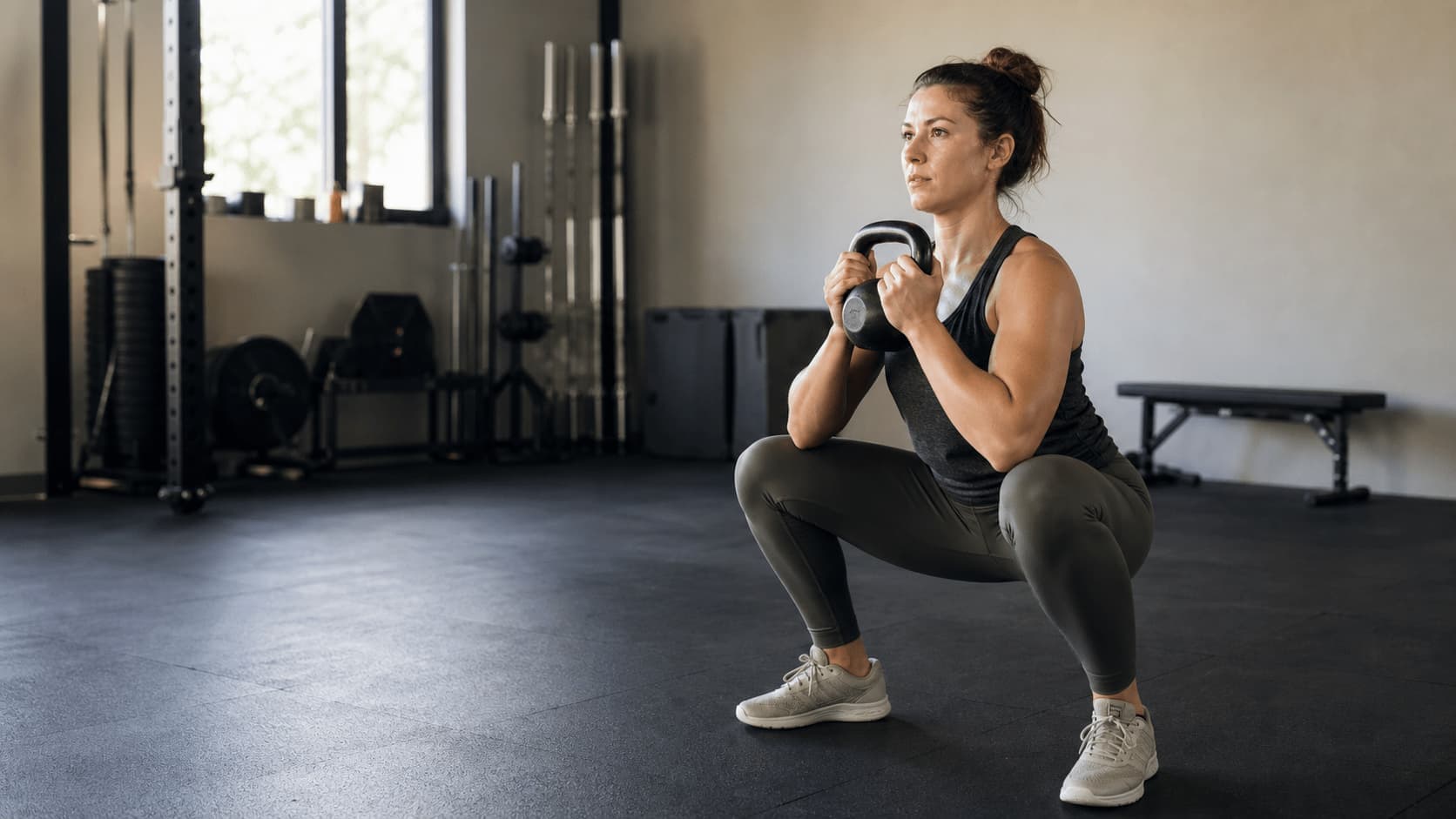
You want to look and feel stronger, but a hard diet sounds exhausting and deliberately gaining weight does not feel right either. That is where body recomposition can sound appealing.
It means changing what your body is made of over time: reducing body fat, building muscle, or holding on to muscle while fat comes down. The scale may barely change while your clothes, strength, and confidence do.
The honest answer is that recomposition can happen, but it is not a shortcut you can force. It asks for patient training, supportive food habits, and a way of measuring progress that is bigger than this morning’s weight.
What body recomposition actually means
Your body weight is one number. It does not tell you how much is muscle, fat, water, food, or simply a normal day-to-day fluctuation.
Body recomposition is about the mix behind that number. A person might keep roughly the same body weight while getting stronger, losing a little around the waist, and building some muscle. Another person might lose weight while preserving much of their muscle through training and recovery.
That is why the question is not only, “What does the scale say?” A more helpful question is, “Is my body moving in the direction I care about?”
When recomposition may be a good fit
Recomposition is often a sensible first focus when you are building consistent habits rather than chasing a fast physical change. It may suit you if you are:
- new to resistance training, or returning after a long break;
- ready to follow a simple strength routine for several weeks;
- tired of switching between strict dieting and giving up;
- more interested in feeling capable and looking a little leaner than in hitting a certain scale number;
- able to give sleep, food, and recovery some attention.
If you have trained consistently for years and are already very lean, changes may be slower and harder to notice. That does not make progress impossible. It simply makes patience more important and dramatic promises less useful.
Four priorities that give it a real chance
1. Train to get a little better
You do not need a complicated gym plan. You do need a repeatable one.
Choose strength exercises you can perform safely, practise them regularly, and write down what you did. Over time, try to add a rep, improve your control, or use a little more weight when it makes sense. Small improvements are meaningful feedback.
For general health, the WHO physical-activity guidance includes muscle-strengthening activity involving major muscle groups on two or more days each week. Your own plan can be simpler or more specific, depending on your experience and circumstances.
2. Make meals supportive, not perfect
Protein is useful because it supports training and muscle maintenance, but meals do not need to look like a fitness challenge. Build regular meals around foods you enjoy and can afford. Include a protein-rich food when it fits, then make room for carbohydrates, fats, fruit, vegetables, and normal social eating.
This is where logging can become practical rather than performative. In Kalorika, Coach can use what you have already logged, the foods you enjoy, and the time you have to suggest a recipe or next meal that still fits your day.
A systematic review of protein and resistance training found that protein supplementation can support gains in lean mass and strength alongside resistance training. That does not mean a supplement is required or that one food choice makes or breaks your result.
3. Avoid turning the plan into a hard cut
If your main aim is to build or preserve muscle, a very aggressive diet can work against it. A research review found that a sustained energy deficit can reduce lean-mass gains from resistance training. Read the review of energy deficit and resistance training for the technical detail.
This is not a rule that you must eat at one exact level. It is a reminder to avoid treating exhaustion and constant hunger as proof that a plan is working.
4. Let recovery count as part of the work
Training sends a signal. Recovery is where you have the chance to adapt to it.
Aim for sleep you can realistically maintain, leave room between demanding sessions, and notice when soreness, low energy, or a stressful week calls for a lighter approach. A plan that fits ordinary life usually lasts longer than a perfect plan that only works for ten days.
How to see progress when the scale is quiet
Use a few signals together. No single one has to tell the whole story.
- Strength and skill: Are you lifting with better control, adding repetitions, or feeling more confident in the same movements?
- Fit and comfort: Do certain clothes feel different? Do you feel more capable during everyday tasks?
- A calm weight trend: If weighing yourself feels useful, look at a trend over several weeks under similar conditions. Do not let one high or low day decide the story.
- Optional photos or measurements: Taken consistently and only if they feel neutral or helpful, they can show change that a scale misses.
Home body-fat scales can be interesting, but their individual readings are not precise enough to judge a single week. Treat them as optional background information, not a verdict.
Kalorika can make this review less abstract by keeping your logged meals and weight trend in the same place. Coach waits for a pattern that deserves attention, then helps you choose whether to stay the course or look at the plan again.
Try a simple six-week recomposition block
Instead of attempting everything at once, run a small experiment for six weeks.
- Pick two or three strength sessions you can repeat each week.
- Make one or two meal changes that help you eat more regularly and include protein more often.
- Keep an enjoyable form of movement in your week, such as walking, cycling, or sport.
- Log the meals you actually eat and your weigh-ins, then keep one or two other progress signals, such as workout notes or waist measurements, alongside them.
- At the end of six weeks, review rather than react.
Ask yourself: Did my training become more consistent? Did I get stronger or more confident? Is my energy manageable? Do my habits still feel like something I can continue?
If the answer is mostly yes, you have useful progress even if the scale has been boring. If the answer is no, simplify the routine or choose one clearer goal. That is information, not failure.
Recomposition, fat loss, or muscle gain?
There is no permanently correct phase. Choose the direction that makes the most sense for the next few months.
Choose recomposition when you want to establish training and food habits, you are returning to exercise, or you would rather make gradual changes without making the scale your main project.
Choose a fat-loss phase when reducing body weight is your clear priority and you can do it without extreme rules or harming your relationship with food.
Choose a muscle-building phase when strength and muscle are your main goals, and you are comfortable making recovery and training progress the focus.
If you want help making that choice, read our article on choosing a fat-loss, maintenance, or muscle-building phase.
Common questions
Can I recomp while eating at maintenance?
Sometimes. A stable scale weight does not rule out a change in body composition. But maintenance is not a guarantee, and your starting point, training, food, sleep, and consistency all matter.
Do I need to track every calorie?
The clearest picture comes from logging meals as consistently as you can. Your days do not need to look perfect. When Kalorika has what you actually ate, Coach has better context for practical guidance on what may fit next. Treat logging as useful information for the next choice, not a test you can fail.
Can I choose where I lose fat first?
No. Exercise can strengthen a body part, but it does not let you choose where body fat changes first. Focus on habits and full-body progress rather than trying to solve one area with endless extra exercises.
How long does body recomposition take?
Longer than a quick challenge. Give a simple plan enough time to teach you something, then review it using more than one signal. A few consistent months are usually more useful than several restarts.
When to get professional support
This is general fitness education, not personal medical advice. Speak with a qualified health professional before making major food or exercise changes if you are pregnant or recently gave birth, are under 18, manage a health condition, use medicines that affect weight or appetite, or have a history of an eating disorder.
The goal is not to make your body a constant project. It is to build a routine that helps you feel stronger, more informed, and at home in your own life.